Top Lords
GAME SPARKStrategy
4.7618.00 Reviews
- Version
- 1.0.46
- Installs
- 1.00M
- Age Rating
- Teen
Screenshots
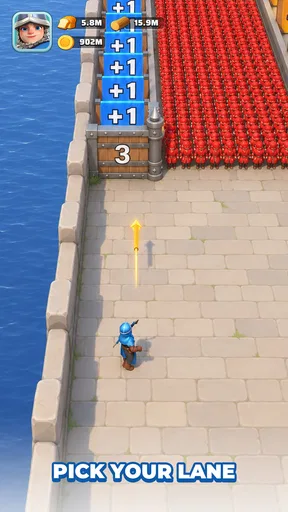
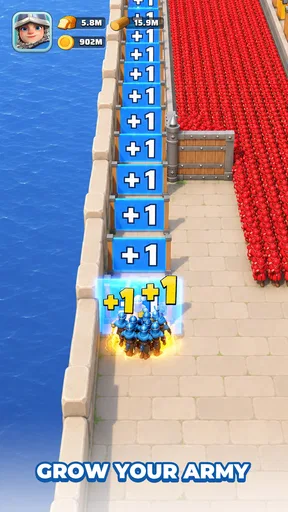
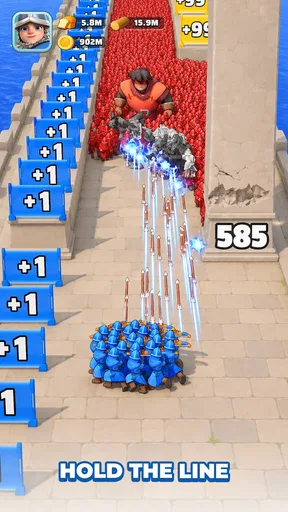
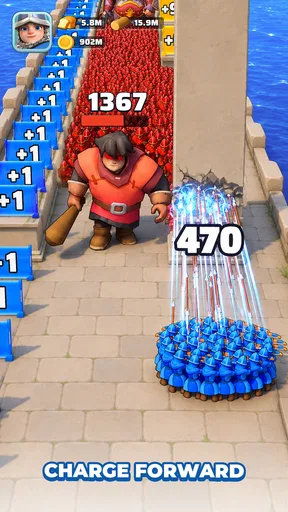
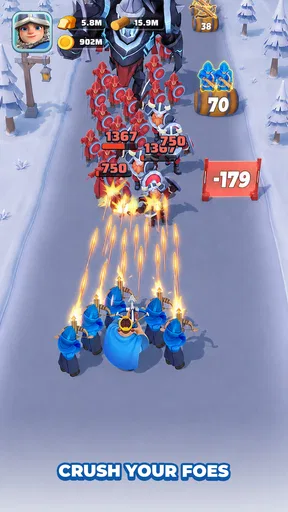
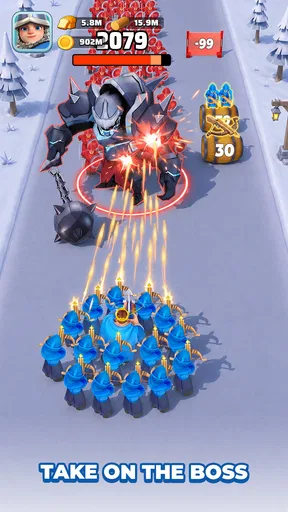
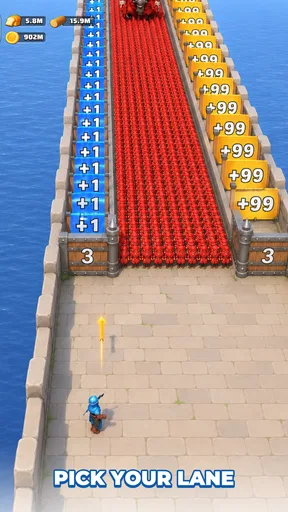
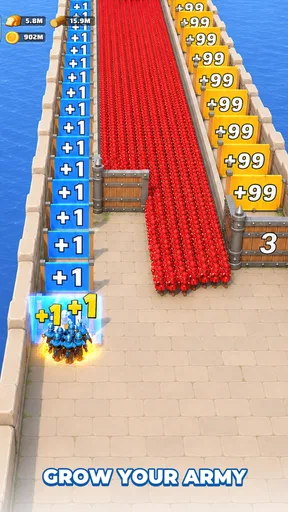
Our Review of Top Lords
 Analysis by Appyee
I approached Top Lords as a strategy game rather than as a quick distraction, and that distinction matters from the first session. Its central promise is built around leading a people, protecting a developing realm, defeating rival forces, and turning a fragile settlement into something that feels like a kingdom. That gives the game a broader sense of purpose than a simple battle title, although it also means that progress is best judged over repeated visits instead of one short burst.
Created by GAME SPARK, this free strategy game is aimed at Teen players and is available for devices running Android 6.0 or later. It has reached over half a million installs and holds a 4.6 average from roughly eleven thousand ratings, which suggests that the basic formula has found a substantial audience. I would still treat those figures as a starting point rather than a guarantee: the real question is whether you enjoy planning, waiting for development, and making choices that may help your kingdom later instead of only rewarding you immediately.
How Top Lords feels during ordinary play
The first thing I noticed is that the game asks me to think in layers. There is the immediate concern of surviving pressure, but there is also the longer task of building enough strength to make future decisions easier. That creates a useful rhythm: I can deal with what is in front of me, then step back and consider whether my next move improves the whole realm or merely patches a temporary problem.
That rhythm is also where the title separates itself from a straightforward action game. A player looking for constant tapping and instant victories may find the strategic pauses slow. I found them more valuable when I used them to review priorities rather than treating every available action as something that had to be used immediately. In a game about becoming a lord, restraint is often more useful than speed.
The store presents it as a game about saving people, crushing enemies, and forging a kingdom. In practice, I read that as three connected responsibilities: keeping the realm moving, preparing for conflict, and deciding which improvements deserve attention first. The appeal comes from the tension between those responsibilities. Focusing too narrowly on military progress can leave the wider development feeling neglected, while spending too much time improving the realm can make an approaching threat feel more serious.
What makes the strategy approachable
I think the strongest entry point is the clear fantasy of leadership. You are not simply moving pieces around a board with no context; your choices are framed as part of a larger struggle for survival and control. That framing makes ordinary decisions feel more meaningful, especially for players who enjoy management games but want a stronger sense of conflict.
At the same time, the game is not automatically ideal for someone who wants a compact, self-contained campaign. Its appeal depends on returning to the same kingdom and gradually shaping its position. If you prefer strategy games where every session begins and ends cleanly, a traditional puzzle strategy title or a short turn-based campaign may suit you better.
One practical habit helped me avoid wasting attention: before making a major move, I asked whether it solved an urgent problem or only looked attractive because it was available. That small pause is especially useful when several development choices compete for the same resources or time. It also makes the game feel less like a checklist and more like a sequence of deliberate decisions.
Speed expectations and the cost of waiting
Top Lords is not a game I would recommend judging by how quickly the opening screen leads to action. Its strategic identity naturally includes moments where the best choice is to prepare, observe, or let a development step finish. The perceived pace therefore depends heavily on what you want from the session. For a player who enjoys planning between visits, the slower stretches create anticipation. For someone expecting immediate battles every time, they can feel like friction.
My advice is to open the game with a specific purpose. A short visit works better when I already know whether I want to check the realm, prepare for conflict, or make a development decision. Without that intention, it is easy to move through available actions without understanding which ones matter most. The game feels faster when the player has a plan, even though the underlying progression still takes time.
That is one of the less obvious lessons here: perceived speed is partly a planning skill. A player who keeps every part of the kingdom moving can make a return visit feel productive, while a player who commits everything to one narrow goal may eventually face a quiet period with little meaningful to do. I would therefore avoid spending all attention on the most visible upgrade or threat. Keeping a secondary objective in mind makes the slower sections less empty.
The current version is 1.0.35, so anyone installing it should make sure the device receives the current build rather than relying on an older copy. I would not interpret a version number alone as proof of flawless performance, but staying updated is the sensible first step when a strategy game involves several connected systems and repeated progress.
Heavy-use moments and resource awareness
The busiest moments are likely to come when several parts of the kingdom demand attention at once. That is when the game’s leadership theme becomes most convincing, but it is also when careless decisions can make the next session harder. I found it useful to separate urgent defense from attractive expansion. Not every opportunity deserves an immediate response, and trying to advance everything at once can make the realm feel less prepared overall.
A concrete workflow I would recommend is simple: first inspect the immediate danger, then check whether the kingdom can sustain the next commitment, and only after that choose an ambitious improvement. This order prevents a common strategy-game mistake—spending resources on growth and discovering too late that the basic position has become vulnerable.
Heavy use also changes how I think about mobile sessions. A long sitting can be enjoyable when I want to compare options and make several connected decisions, but it is not always the most efficient way to play. Short, purposeful visits can be better for maintaining a balanced realm because they encourage regular checks instead of one large burst of activity followed by neglect.
Players should also approach in-app purchases carefully. The game is free to download, while individual in-game purchases range from $0.99 to $99.99. That is a wide span, so I would not begin by assuming that spending is necessary or that a larger purchase automatically represents better value. I would first learn which parts of progression I actually enjoy, set a personal limit, and avoid buying simply because a temporary obstacle feels inconvenient.
This is especially important for younger players. The Teen content rating does not replace household rules about purchases, and the presence of optional spending can change how a carefully planned game feels. If you are reviewing the game for someone else, I would discuss purchase boundaries before handing over the device rather than after an unexpected transaction.
Reliability, recovery, and returning to the kingdom
For a long-term strategy game, reliability is about more than whether the first launch succeeds. I care about whether returning to the game feels understandable, whether progress remains easy to follow, and whether a player can recover from a poor decision without feeling that the entire kingdom has been ruined. Top Lords works best when I treat mistakes as part of the strategy rather than trying to play every choice perfectly.
That mindset is useful because kingdom-building games can create anxiety around every decision. I would not recommend repeatedly restarting at the first sign of an inefficient move. A more practical approach is to identify what went wrong, protect the most important part of the realm, and use the next actions to restore balance. This turns recovery into a strategic phase instead of a reason to abandon the game.
Another useful habit is to end a session after setting up the next sensible objective. For example, I might leave the kingdom in a position where the next visit begins with a clear check: review the defense, inspect development, or decide whether a rival requires attention. That makes returning easier and reduces the feeling of having to reconstruct the entire plan from memory.
I am cautious about promising perfect stability on every phone because performance can vary with hardware, operating-system condition, available storage, and background activity. The game supports Android 6.0 and later, which makes it accessible to a broad range of devices, but an older compatible phone may not feel as comfortable as a newer one when many parts of the game are active. Keeping other demanding apps closed is a sensible way to reduce avoidable strain.
If a session feels interrupted or progress seems unclear, my first response would be practical rather than dramatic: reopen the game, confirm the current state of the kingdom, and avoid immediately repeating the last action until I understand what was retained. That recovery habit is valuable in any progression-based game, particularly when a single rushed decision can affect several later choices.
Device constraints and everyday use
The minimum operating-system requirement of Android 6.0 makes Top Lords compatible with older Android hardware, but compatibility should not be confused with identical comfort across all phones. A device can meet the software requirement and still feel less responsive if it has limited memory, a crowded storage drive, or many background processes competing for attention.
For everyday use, I would place the game in the category of titles that benefit from a little preparation. Before a longer session, closing unused apps and making sure the phone is not already under heavy load can help the experience feel more consistent. I would also avoid judging performance while the device is busy with downloads, updates, or other demanding tasks. Those conditions can make any game appear less responsive than it normally is.
Battery expectations deserve a realistic approach too. A strategy game may look calmer than an action game, but repeated interaction, animations, network activity, and long sessions can still make a difference on a phone with an aging battery. I would use shorter sessions when away from a charger and reserve extended kingdom planning for a time when the device is comfortable and cool.
A realistic everyday scenario would be a player checking the realm during a commute or a lunch break, making one or two careful decisions, and returning later to reassess the result. That pattern suits the game better than trying to force a complete campaign into a single sitting. It also gives the player time to notice whether a choice actually improved the kingdom instead of judging it only by the immediate reward.
On a newer phone, I would expect the game to be easier to enjoy during longer sessions simply because the device is more likely to remain responsive under sustained use. On an older phone that technically meets the requirement, I would be more selective: reduce multitasking, keep visits purposeful, and stop if the device becomes uncomfortable. Those are not glamorous tips, but they make a noticeable difference to mobile strategy games.
How it compares with familiar strategy alternatives
Compared with a classic turn-based strategy game, Top Lords appears better suited to players who want an ongoing kingdom rather than a match that reaches a definite final turn. The trade-off is that ongoing progression can feel less tidy. A traditional board-style game gives you a clear state, a clear opponent, and a defined conclusion; this kind of mobile kingdom game asks you to maintain interest over time.
Compared with a pure city builder, it offers a stronger sense of danger because the fantasy includes enemies and the need to protect a people. The trade-off is that peaceful optimization is not the whole experience. If your favorite part of strategy is arranging buildings, balancing production, and watching a settlement grow without military pressure, a gentler builder may be a better fit.
Compared with an action-focused war game, Top Lords gives more value to preparation and broader judgment. You cannot rely only on reflexes or rapid input. That makes it more welcoming to players who enjoy thinking through consequences, but less satisfying for anyone who wants direct control and constant excitement.
The most important comparison is with other free mobile strategy games that use optional purchases. Here, the right question is not whether spending exists—it does—but whether you can enjoy the decision-making without feeling pushed into it. I would play long enough to understand the normal rhythm before deciding whether any purchase improves my experience. If the game’s waiting or progression pressure bothers you from the beginning, paying more is unlikely to fix the underlying mismatch.
Who will enjoy it, and who should skip it
I would recommend Top Lords to players who like the idea of returning to one developing realm, balancing protection with expansion, and making choices that have consequences beyond the current screen. It is a good candidate for someone who enjoys strategy in small mobile sessions but still wants a larger sense of progression. The kingdom theme gives each visit a reason to matter.
I would be more hesitant to recommend it to players who need immediate action, dislike waiting between meaningful choices, or want a fully self-contained experience with no pressure to return. It is also not my first choice for someone who wants a quiet builder with no conflict, or for a player who prefers strategy games where every outcome can be calculated with complete certainty.
Parents and guardians should consider the Teen rating and the available purchase range before allowing unsupervised play. For adults, the main question is personal tolerance for free-to-play progression. I would set a budget in advance, avoid impulse purchases, and judge the game by its planning rather than by how quickly money can remove an obstacle.
My performance verdict after weighing the trade-offs
My overall impression is that Top Lords is most convincing when played as a deliberate, ongoing strategy experience. Its perceived speed improves when I enter each session with a purpose, and its heavier moments become manageable when I separate immediate defense from long-term development. I would not call it a game for people who want nonstop action, but I do think it offers a satisfying framework for players who enjoy building toward strength.
On the device side, the Android 6.0 minimum makes the game broadly reachable, yet older compatible phones may require more care during longer sessions. I would keep expectations sensible, reduce background load, and use shorter visits if the phone feels strained. Those precautions do not change the game itself, but they can make the difference between a comfortable strategy session and a frustrating one.
GAME SPARK has positioned this as a free strategy game, and the combination of kingdom development and conflict gives it a clear identity. The 4.6 average and more than five hundred thousand installs indicate strong interest, while the current version gives players a straightforward reason to keep the app updated. I see the best value in trying it without spending first, learning its pace, and deciding whether the leadership loop genuinely holds my attention.
My recommendation is conditional but positive: install it if you enjoy patient planning, gradual progress, and the challenge of keeping several priorities in balance. Skip it if you want instant battles, a short finish line, or a strategy game untouched by optional purchases. For the right player, the pleasure is not simply winning the next fight; it is recovering from setbacks, preparing more intelligently, and watching a vulnerable realm become a kingdom through a series of choices that feel like your own.
Privacy and Permissions
See what permissions an app requests and how it handles your data.
- Calendar
- read calendar events plus confidential information, add or modify calendar events and send email to guests without owners' knowledge
- Phone
- read phone status and identity
- Photos/Media/Files
- read the contents of your USB storage, modify or delete the contents of your USB storage
- Storage
- read the contents of your USB storage, modify or delete the contents of your USB storage
- Camera
- take pictures and videos
- Wi-Fi connection information
- view Wi-Fi connections
- Device ID & call information
- read phone status and identity
- Other
- view network connections, full network access, control vibration, prevent device from sleeping, Google Play license check
Verdict
Strengths of Top Lords
- Simple controls make it easy for beginners to start playing.
- Hero upgrades add variety to battles and long-term progression.
- Alliance features encourage cooperation with other players.
- Regular events provide extra objectives and rewards.
- The medieval art style gives the game a distinctive visual identity.
Limitations of Top Lords
- Progress can feel slow without spending money on premium resources.
- Frequent timers may interrupt longer play sessions.
- The interface can feel crowded with menus and notifications.
- Power differences between players may affect competitive balance.
- The game requires a stable internet connection to play.
Similar Picks in This Category
View All
Clash of Clans
Supercell4.5

Plants vs. Zombies™
ELECTRONIC ARTS3.7

Lords Mobile: Kingdom Wars
IGG.COM4.5

Clash Royale
Supercell4.4

State.io — Conquer the World
CASUAL AZUR GAMES4.1

Car Driving School : Car Games
Spark Game Studios3.9
Frequently Asked Questions
What is Top Lords, and what kind of game is it?
Top Lords is a mobile strategy game focused on building, resource management, hero development, and real-time battles. Players typically expand their territory, upgrade structures, recruit or improve powerful characters, and compete against other users. The game combines city-building elements with tactical combat, so progress depends not only on upgrading your base but also on choosing suitable heroes, troops, formations, and battle strategies.
Can Top Lords be downloaded and played for free?
Top Lords is generally available as a free download, allowing players to begin playing without purchasing the game. However, it may include optional in-app purchases for resources, upgrade materials, premium currency, or limited-time offers. These purchases are not always required to enjoy the main gameplay, but spending users may progress faster. Parents should review device purchase settings if children will be playing.
Does Top Lords require an internet connection?
Because Top Lords is built around online progression, events, player competition, account data, and server-based features, a stable internet connection is normally required. Offline access may be limited or unavailable, particularly for battles, claiming rewards, joining alliances, and participating in events. Using Wi-Fi or a reliable mobile connection is recommended to avoid disconnections and to ensure that progress is properly synchronized.
Is Top Lords suitable for beginners, or is it difficult to learn?
Top Lords is accessible to beginners, especially during the early stages when tutorials and guided objectives explain construction, upgrades, missions, and combat. Nevertheless, the number of menus, currencies, heroes, events, and upgrade systems can feel overwhelming at first. New players should follow the tutorial carefully, prioritize the main quests, avoid spending resources too quickly, and gradually learn which characters and upgrades best support their preferred strategy.
Are there multiplayer features in Top Lords?
Yes, multiplayer interaction is an important part of Top Lords. Depending on the available version and server features, players may encounter competitive battles, alliances, rankings, cooperative activities, world events, and other online challenges. Joining an active alliance can provide useful rewards, assistance, and strategic guidance. Players should remember that multiplayer progress and event availability can vary according to the server, region, and current game updates.
Play our best games!


